Global Architecture
Established direction across products, teams, and customer journeys.
PRINCIPAL UX ARCHITECTURE
Leading global experience architecture across complex products and critical customer journeys.
Back to Product →Role
Principal UX Architect
Team
Cross-functional teams across product, design, engineering, research, and global business units.
Duration
Enterprise Engagement
Industry
Insurance & Financial Services
Ownership
Executive Partners
Business Outcome
Clarified complex enterprise systems and established scalable experience direction across My Accounts, Claims, and critical customer journeys.
As a Principal UX Architect, I was brought into strategic initiatives that required alignment across products, platforms, customer journeys, business units, and global teams. I partnered with directors, vice presidents, product leaders, designers, engineers, and researchers to clarify complex systems and establish scalable experience direction.
My role extended beyond the delivery of individual interfaces. I was trusted with high-priority initiatives where teams needed greater clarity across customer needs, business requirements, platform architecture, and product direction.
I helped create the connective tissue between strategic intent and product execution—mapping complex ecosystems, aligning teams, defining scalable frameworks, and translating broad organizational goals into actionable customer experiences.
State Farm's digital ecosystem served customers across numerous products, accounts, service journeys, and internal business teams. The challenge was not simply to improve isolated screens. It was to create structures that helped products behave like one connected experience.
Established direction across products, teams, and customer journeys.
Worked directly with directors and vice presidents on strategic initiatives.
Connected product, design, engineering, research, content, and business priorities.
Created frameworks and architecture that could extend beyond one project.
Helped shape what teams built, not only how interfaces looked.
My Accounts Platform
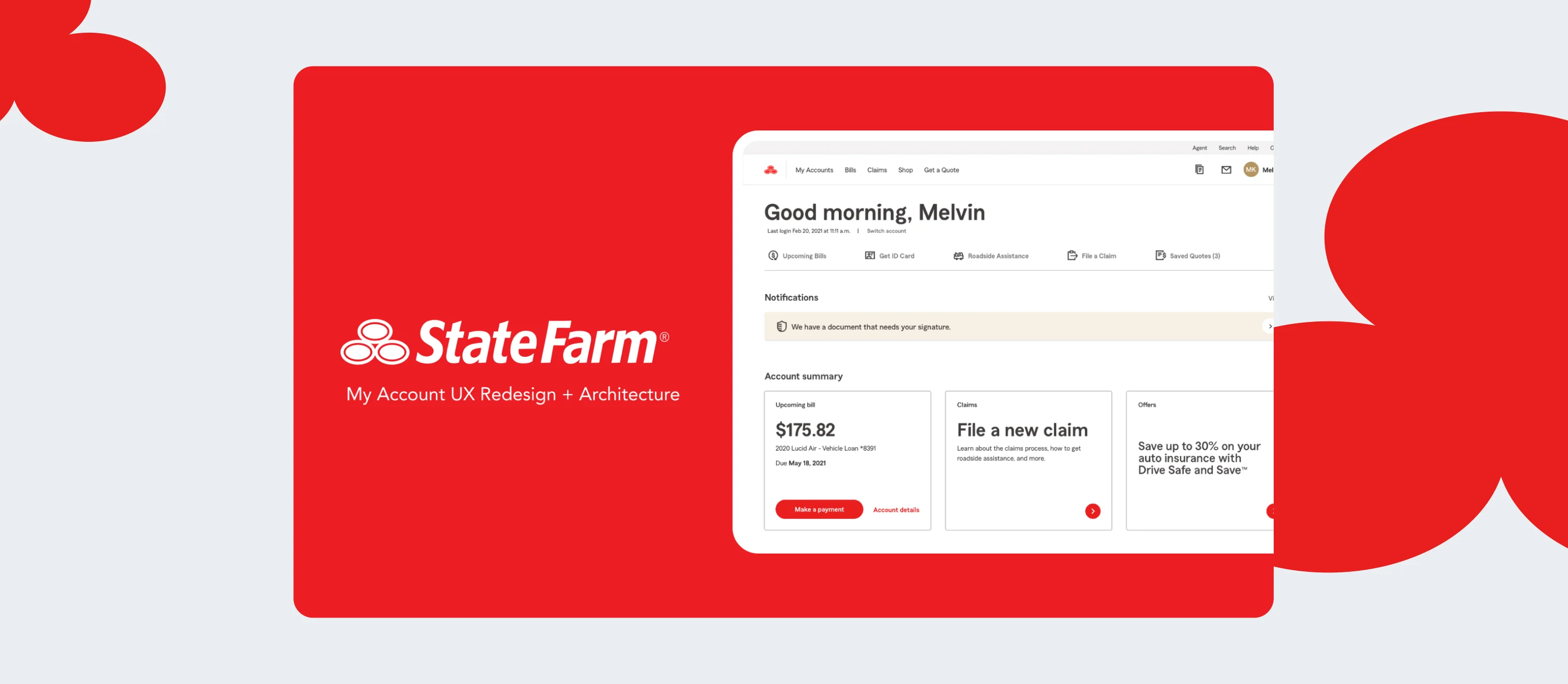
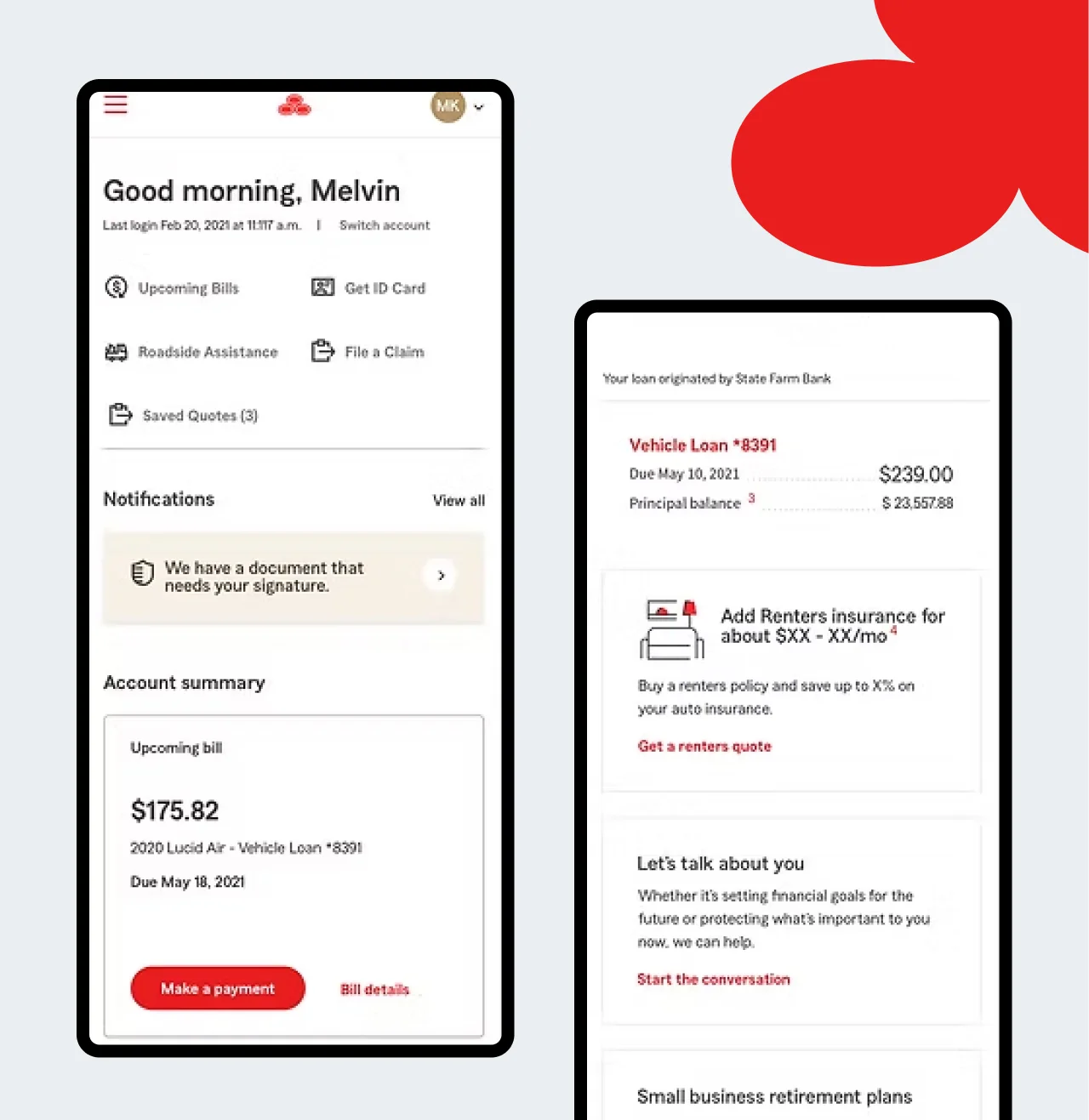
The My Accounts work required a scalable model for organizing customer relationships across products, services, profiles, and account activity. I led architecture and product-definition efforts that helped clarify how customers would move through the ecosystem and how teams could build against a shared framework.
Before defining individual screens, I mapped the relationships among users, products, accounts, services, and platform entry points. This helped teams see the broader system and make decisions that supported both immediate requirements and future growth.
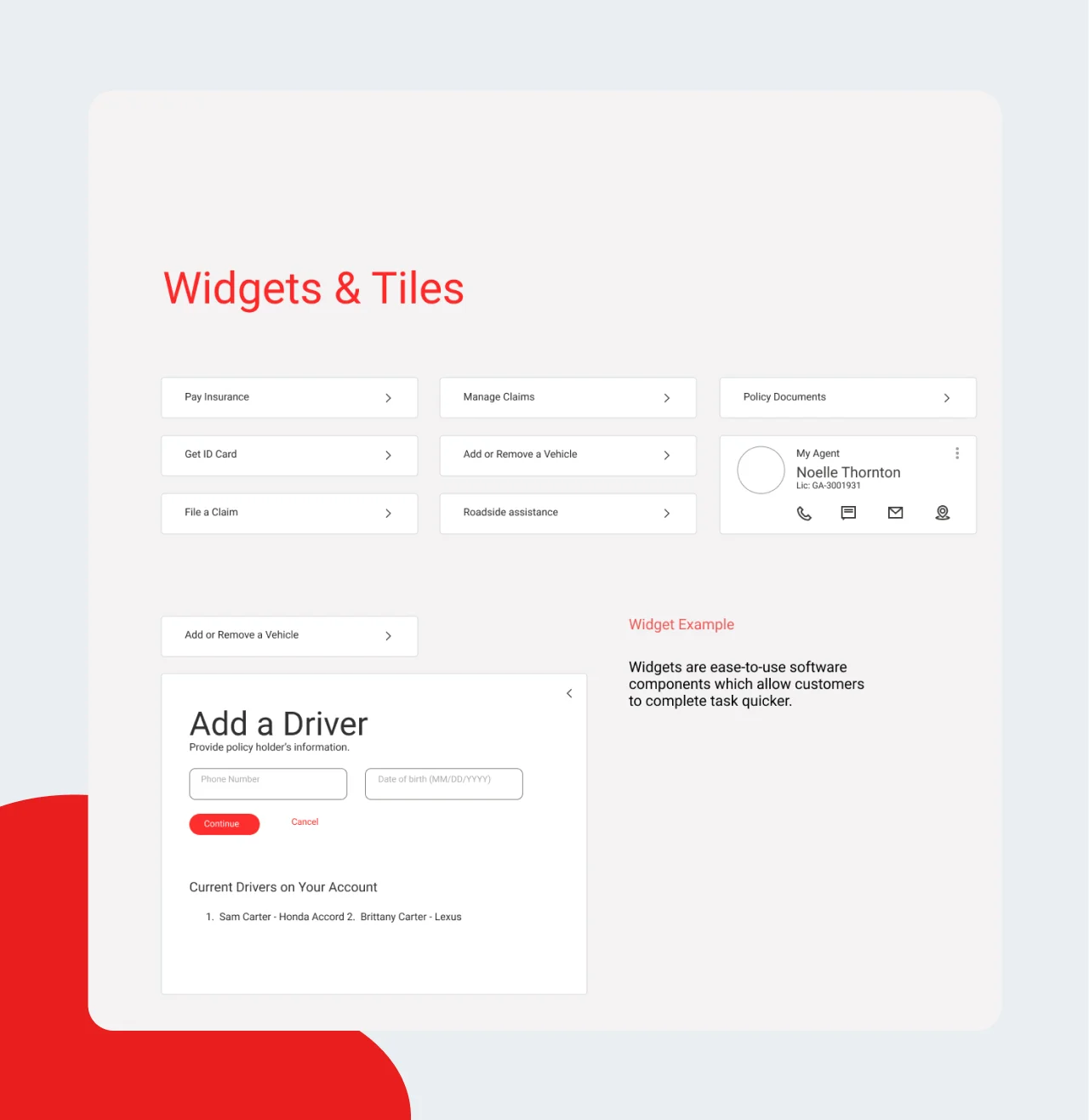
The architecture was translated into product hubs, navigation systems, account structures, and interface patterns that made complex information easier for customers to understand and easier for product teams to scale.
Claims Experience
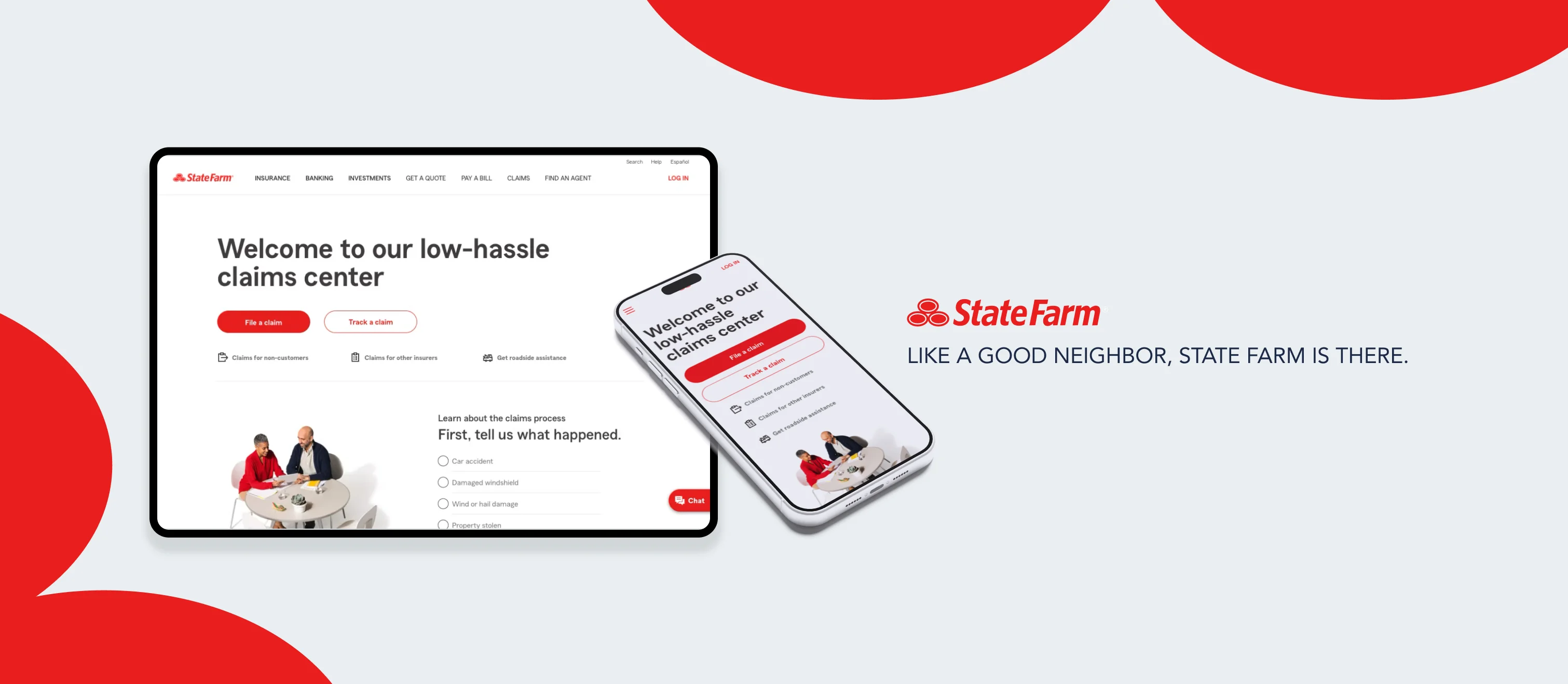
Filing a claim often begins during a moment of confusion, anxiety, or urgency. The landing experience needed to quickly help customers identify their situation, understand what information they needed, and take the correct next step.
The work combined customer insight, experience strategy, content clarity, responsive design, and service navigation to make the journey feel more approachable and actionable.
Help customers understand where to begin.
Use direct language and clear choices to reduce uncertainty.
Organize the experience around customer situations rather than internal structures.
Ensure the journey worked across devices and customer needs.
Make the next step obvious without overwhelming the customer.

Enterprise products succeed when customer needs, business goals, technical constraints, and organizational realities are considered together. Across both initiatives, I translated broad and sometimes competing inputs into clear frameworks that teams could understand, discuss, and execute.
Frame the problem around customer intent and context.
Map relationships before committing to screens.
Create shared understanding across leadership and delivery teams.
Build patterns that can extend across products and journeys.
Directors and vice presidents regularly brought me into high-priority work because of my ability to connect customer experience, business needs, product architecture, and strategic direction.
My influence expanded beyond traditional UX responsibilities, and I was ultimately invited to join the product management organization—recognition that the work I was leading was helping shape product direction, not simply interface execution.
Created clarity across complex stakeholder groups and competing priorities.
Established systems, frameworks, and direction that supported multiple teams.
Presented concepts and recommendations in ways that helped leadership make decisions.
Partnered across product, engineering, design, research, content, and business teams.
Helped designers and partners understand the broader product and customer ecosystem.
The State Farm work demonstrates my ability to operate at two levels simultaneously: shaping large-scale systems and ensuring that the resulting customer experience remains clear, useful, and human.
Influenced complex initiatives across products, teams, and senior stakeholders.
Made hidden relationships visible through architecture, mapping, and shared frameworks.
Grounded product direction in real customer needs and moments of vulnerability.
Operated with a level of strategic ownership that led to an invitation to join product management.
My time at State Farm reinforced that the most valuable design leaders do more than produce solutions. They help organizations understand the problem, see the complete system, align around a direction, and move forward with confidence.
That experience became foundational to how I later approached streaming products, education technology, sports platforms, interactive entertainment, and original intellectual property.
Return to Caiden's Courage — the flagship world that followed this enterprise chapter on the homepage — or browse entertainment and interactive media work.